
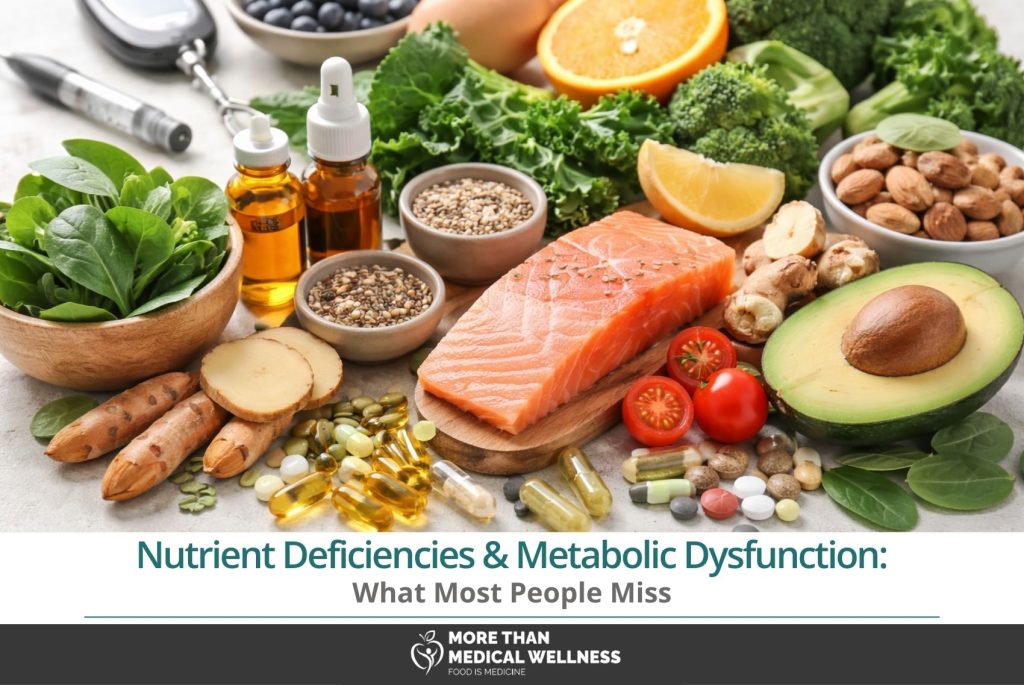
Introduction: The Overlooked Link Between Nutrients and Metabolism
Metabolism is often discussed in terms of calories, exercise, or weight loss — but in reality, metabolism is primarily a cellular process, not a lifestyle trend. And that process relies on one thing above all:
Micronutrients.
Vitamins, minerals, amino acids, and essential fatty acids act as the chemical cofactors that allow cells to:
- Produce energy
- Regulate hormones
- Support thyroid function
- Manage inflammation
- Build neurotransmitters
- Detoxify naturally
- Repair tissues
- Maintain stable blood sugar
Without these nutrients, metabolism doesn’t slow down — it becomes metabolically inefficient.
This inefficiency is one of the most common yet underdiagnosed contributors to:
- Low energy
- Fatigue
- Weight gain or difficulty losing weight
- Hormonal imbalance
- Mood changes
- Thyroid dysfunction
- Poor exercise recovery
- Slowed cognitive function
At More Than Medical Wellness, we evaluate nutrient status because it offers one of the clearest, most correctable pathways to restoring metabolic health.
Why Nutrient Deficiencies Are So Common Today
Modern life creates the conditions for widespread deficiencies, even in adults who try to eat well.
1. Food quality has changed
Modern agriculture prioritizes volume over nutritional density. Many fruits and vegetables contain lower levels of key minerals compared to decades ago.
2. High-stress lifestyles increase nutrient demand
Stress accelerates the use of magnesium, B vitamins, vitamin C, and amino acids, leading to chronic depletion.
3. Common medications can interfere with nutrient absorption
For example:
- Antacids reduce stomach acid needed for B12 and mineral absorption
- Metformin can reduce B12 levels
- Certain blood pressure medications influence electrolyte balance
4. Digestive issues limit what the body can absorb
Even when people eat healthy foods, absorption can be impaired by:
- Low stomach acid
- Imbalanced gut bacteria
- Inflammation in the GI tract
- Poor digestive enzyme production
5. Restricted diets often miss key nutrients
Popular eating patterns — vegan, low-carb/keto, gluten-free, or low-fat diets — can unintentionally eliminate essential micronutrient sources.
6. Athletes and high-performers burn through nutrients faster
Intense training increases the need for electrolytes, amino acids, antioxidants, and B vitamins.
Together, these factors explain why even people who appear “healthy” can have chronic metabolic symptoms rooted in nutrient depletion.
The Most Common Nutrient Deficiencies Affecting Metabolism
These deficiencies routinely show up in Functional Medicine testing — even in individuals with good diets and normal basic blood work.
1. Magnesium
Magnesium is required for more than 300 biochemical reactions, including energy production, blood sugar control, and muscle recovery.
Symptoms of low magnesium
- Fatigue
- Muscle tightness
- Anxiety or irritability
- Sleep disruption
- Insulin resistance
- Headaches
2. Vitamin D
Vitamin D acts more like a hormone than a vitamin. It influences metabolic rate, immune function, and inflammation.
Low vitamin D contributes to:
- Fatigue
- Weight retention
- Frequent illness
- Hormonal imbalance
- Mood changes
3. B Vitamins (especially B12, B6, Folate)
These are essential for:
- Energy production
- Red blood cell formation
- Methylation
- Detoxification
- Cognitive function
Symptoms of deficiency
- Brain fog
- Low motivation
- Fatigue
- Slow metabolism
- Tingling or numbness
4. Omega-3 Fatty Acids (EPA + DHA)
These support cell membrane health, inflammation control, and metabolic efficiency.
Low omega-3 levels may lead to:
- Stiffness or joint discomfort
- Increased inflammation
- Lower metabolic flexibility
- Mood changes
- Slower recovery
5. Iron
Iron is essential for oxygen transport and cellular energy.
Low iron may cause:
- Fatigue
- Exercise intolerance
- Breathlessness
- Low mood
- Cold hands/feet
6. Zinc
Zinc supports immune regulation, hormone production, and cellular repair.
Signs of deficiency:
- Poor wound healing
- Low appetite
- Hormonal changes
- Reduced immunity
7. Protein and Amino Acid Deficiency
Many people simply don’t eat enough high-quality protein.
Low amino acid levels affect:
- Metabolism
- Muscle mass
- Neurotransmitters
- Hunger regulation
- Recovery
How Nutrient Deficiencies Impact Hormones and Metabolism
The body relies on nutrients to regulate hormones and maintain stable metabolic pathways.
Here’s how deficiencies disrupt that process:
1. Thyroid Function
The thyroid requires iodine, selenium, zinc, iron, and B vitamins to convert thyroid hormones into their active form.
Low levels can lead to:
- Slowed metabolism
- Fatigue
- Weight gain
- Cold intolerance
2. Insulin Sensitivity
Magnesium, omega-3s, chromium, and vitamin D support stable blood sugar.
Low levels contribute to:
- Sugar cravings
- Energy crashes
- Fat retention around the midsection
3. Cortisol Regulation
Stress depletes vitamin C, B vitamins, magnesium, and amino acids.
Insufficient nutrients make the stress response harder to regulate, leading to:
- Anxiety
- Poor sleep
- Low energy
4. Sex Hormones
Estrogen, progesterone, and testosterone require key nutrients for proper metabolism and clearance.
Deficiencies may influence:
- Mood swings
- PMS or cycle irregularity
- Low libido
- Weight changes
How Metabolic Dysfunction Develops
Most people don’t develop metabolic issues overnight. It’s a gradual process driven by:
- Nutrient deficiencies
- Chronic stress
- Poor sleep
- Inflammation
- Blood sugar instability
- Hormonal imbalance
- Gut dysfunction
Over time, the body loses metabolic flexibility — its ability to efficiently use carbs and fats for fuel. This leads to:
- Slower recovery
- Lower energy levels
- Difficulty losing weight
- Increased cravings
- Brain fog
- Mood fluctuations
Correcting nutrient deficiencies often improves these issues more effectively than focusing on calories or exercise alone.
Functional Medicine’s Approach: Test, Don’t Guess
At More Than Medical Wellness, we never rely on general assumptions.
We evaluate key areas including:
1. Micronutrient status
Identifying deficiencies in vitamins, minerals, antioxidants, and amino acids.
2. Hormone function
Understanding how nutrient status is influencing hormone balance.
3. Inflammation markers
Detecting metabolic stress or immune activation.
4. Gut absorption
Assessing whether the body is properly digesting and absorbing nutrients.
5. Energy production markers
Evaluating how efficiently mitochondria are generating ATP — the body’s energy currency.
This allows for a personalized treatment strategy rather than a generic supplement plan.
Evidence-Based Strategies to Improve Nutrient Levels & Metabolic Health
1. Improve nutrient density through whole foods
Prioritize high-quality proteins, colorful vegetables, healthy fats, and fiber-rich foods.
2. Support digestion
If the body cannot absorb nutrients, even the best diet falls short.
Supporting gut health improves:
- Enzyme function
- Nutrient absorption
- Inflammation control
3. Optimize stress management
Regulating cortisol reduces the depletion of magnesium, B vitamins, and amino acids.
4. Use targeted supplementation when appropriate
Functional Medicine bases supplements on individual deficiencies, not assumptions.
5. Correct sleep misalignment
Sleep improves hormonal regulation, inflammation levels, and metabolic efficiency.
6. Support detoxification pathways
When the liver is functioning well, hormones and toxins clear efficiently — improving energy and metabolism.
7. IV therapy (when medically appropriate)
IV therapy can rapidly replenish key nutrients in cases of severe deficiency or digestive impairment.
(Still no mention of stem cells, HCTP, or allograft — since this topic does not need it.)
Why Nutrient Optimization Is a Core Strategy at More Than Medical Wellness
Because nutrient deficiencies directly influence:
- Energy
- Mood
- Hormones
- Weight
- Inflammation
- Digestion
- Cognitive performance
- Longevity
Correcting these deficiencies restores the body’s natural metabolic rhythm — something no fad diet can do.
Patients frequently report:
- Higher energy
- Easier weight control
- Increased motivation
- Better sleep
- Improved clarity
- Reduced cravings
- Better exercise recovery
Optimizing nutrients is one of the highest-impact interventions in Functional Medicine because it supports the body at the cellular level, where true metabolic health begins.
Conclusion
Nutrient deficiencies are far more common than most people realize — and they are one of the most correctable causes of metabolic dysfunction. By restoring nutrient balance, supporting digestion, and aligning hormones, patients experience measurable improvements in energy, metabolism, and long-term wellness.
At More Than Medical Wellness, we approach metabolic health through precision, not guessing. When the body has the nutrients it needs, it has the ability to heal, recover, and perform at a higher level.
More Than Medical Wellness
4670 S Fort Apache Rd Suite 130
Las Vegas, NV 89147
Phone: (702) 465-7471